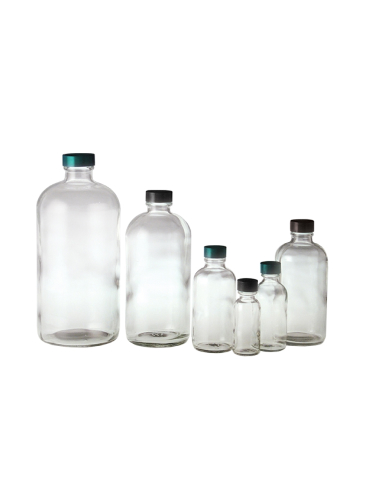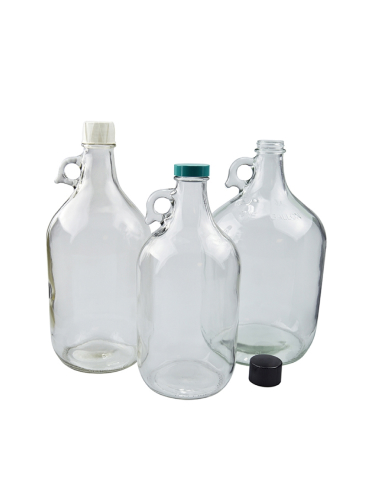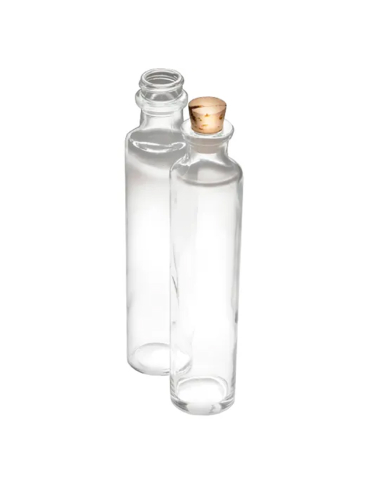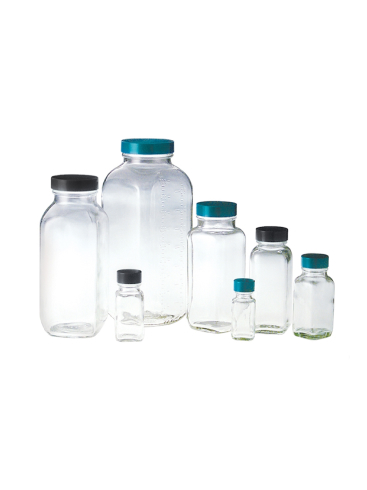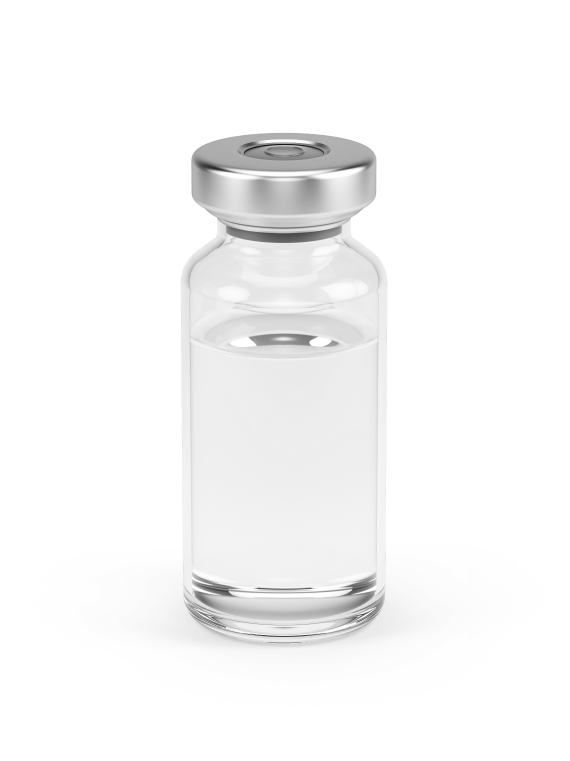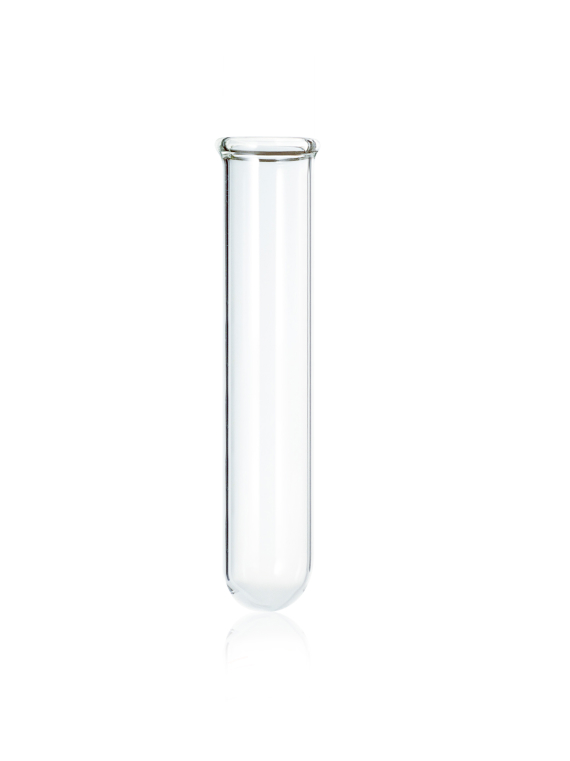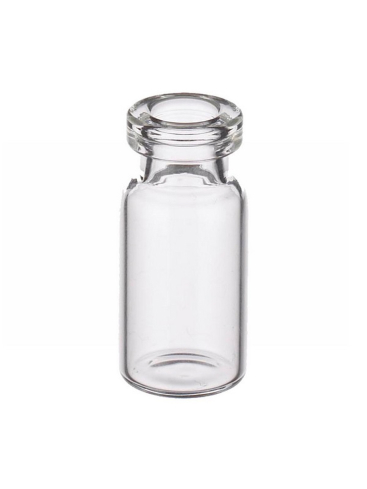
Type I - Borosilicate Glass
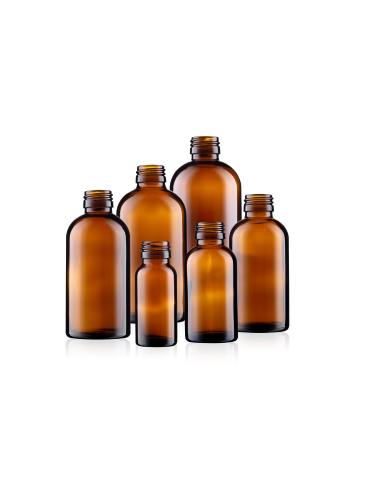
Type II - Treated Soda Lime Glass
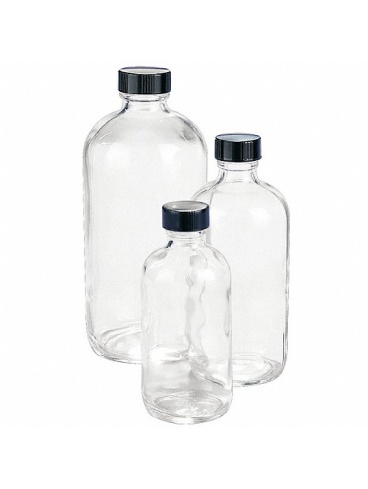
Type III - Soda Lime Glass
The materials used to make glass include approximately 70% sand along with a specific mixture of soda ash, limestone and other natural substances – depending on what properties are desired in the batch.When manufacturing soda lime glass, crushed, recycled glass, or cullet, is an additional key ingredient. The amount of cullet used in the batch of glass varies. Cullet melts at a lower temperature which reduces energy consumption and requires fewer raw materials.Borosilicate glass should not be recycled because it is heat-resistant glass. Because of its heat resistant properties, borosilicate glass will not melt at the same temperature as Soda Lime glass and will alter the viscosity of the fluid in the furnace during the re-melt stage.All of the raw materials for making glass, including cullet, are stored in a batch house. They are then gravity fed into the weighing and mixing area and finally elevated into batch hoppers that supply the glass furnaces.
Methods for producing glass containers
Consumers are looking for more personalized and immersive experiences and are willing to pay more for products that satisfy them on a more experiential level .
Tubing glass
Tubing glass is formed by a continuous draw process using either the Danner or Vello processes to achieve the correct diameter and thickness. The glass is drawn over a line of support rollers by a drawing machine.
Glass flows from a furnace forehearth in the form of a ribbon
Glass flows from a furnace forehearth into a bowl which is then shaped
Blown glass
Blown glass is also known as molded glass. In creating blown glass, gobs of heated glass from the furnace are directed to a molding machine and into the cavities where air is forced in to produce the neck and general container shape. Once they are shaped, they are then known as a Parison. There are two distinct forming processes to create the final container:
Used for narrow containers where the parison is formed by compressed air.
Used for large diameter finish containers in which the parison is shaped by pressing the glass against the blank mold with the metal plunger.
Blown glass forming processes
A blow and blow process occurs when compressed air is used to form the gob into a parison, which establishes the neck finish and gives the gob a uniform shape. The parison is then flipped to the other side of the machine, and air is used to blow it into its desired shape.
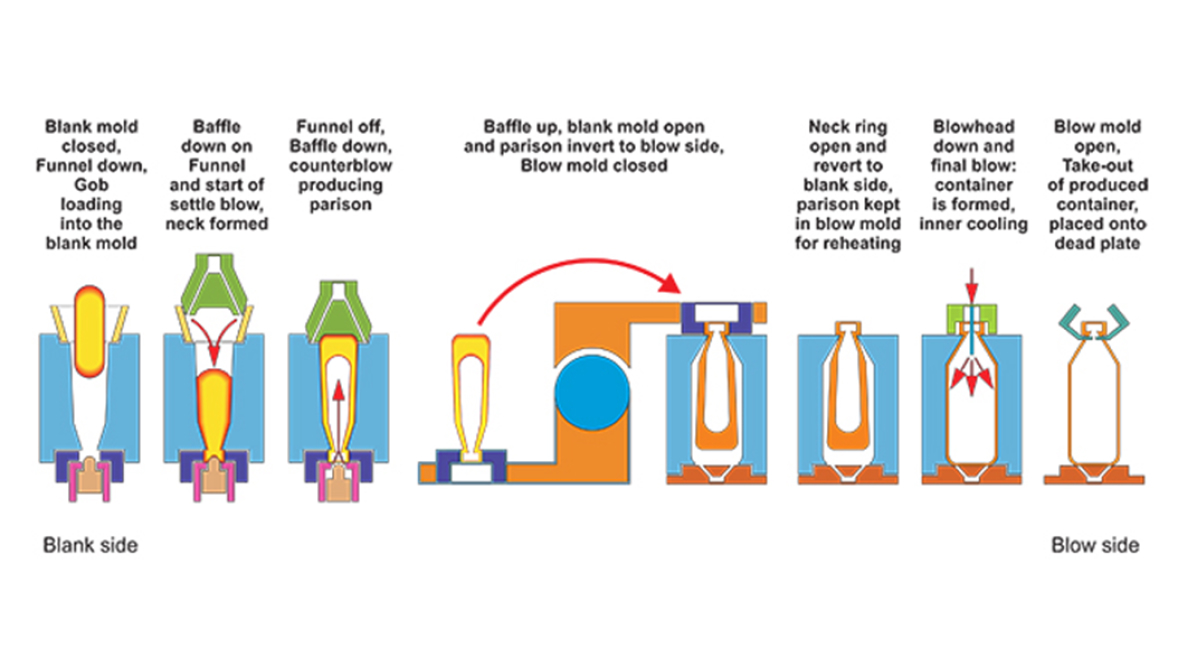
An illustration of the blow and blow glass forming process.
A press and blow process occurs when a plunger is inserted first, allowing air to then follows to form the gob into a parison.At one point this process was typically used for wide mouth containers, but with the addition of a Vacuum Assist Process, it can now be utilized for narrow mouth applications as well.Strength and distribution is at its best in this method of glass formation and has allowed manufacturers to “lightweight” common items such as beer bottles to conserve energy.
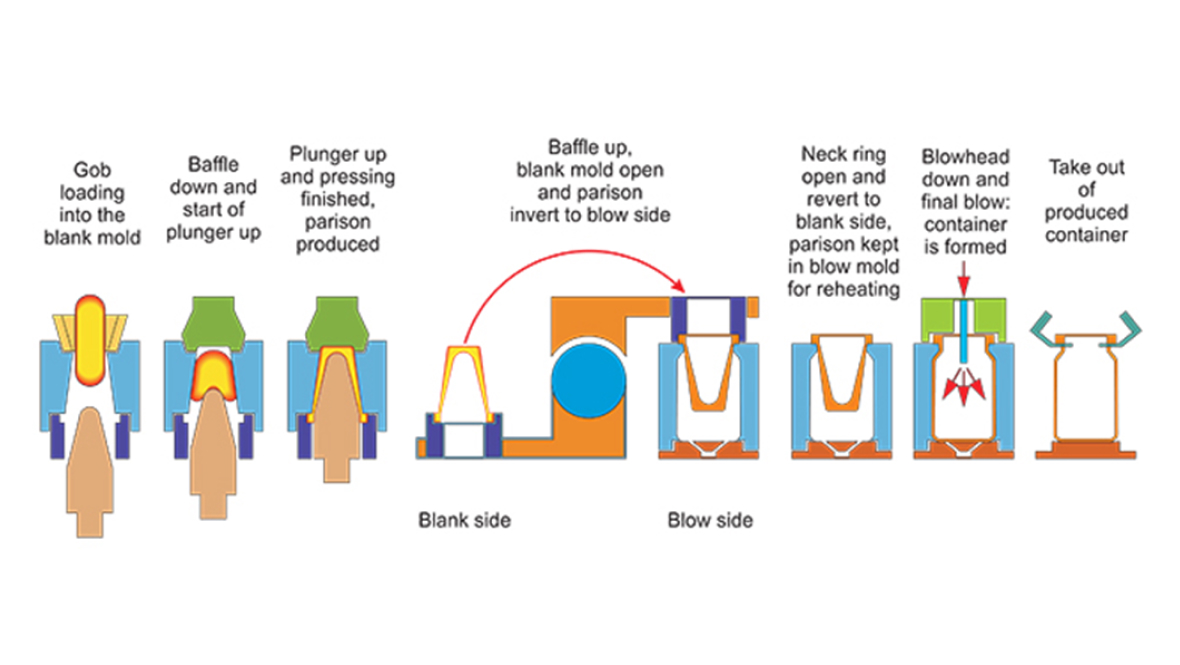
An illustration of the press and blow glass forming process.
Conditioning
No matter the process, once the blown glass containers are formed, the containers are loaded into an Annealing Lehr, where their temperature is brought back up to approximately 1500° F, then reduced gradually to below 900° F. This reheating and slow cooling eliminates the stress in the containers. Without this step, the glass would easily shatter.
Surface and internal treatments
We then apply external treatment to prevent abrading, which makes the glass more prone to breakage. The coating (usually a polyethylene or tin oxide based mixture) is sprayed on and reacts on the surface of the glass to form a tin oxide coating. This coating prevents the bottles from sticking to one another to reduce breakage.Tin oxide coating is applied as a hot end treatment. For cold end treatment, the temperature of the containers is reduced to between 225 and 275° F before application. This coating can be washed off. Hot End treatment is applied before the annealing process. Treatment applied in this fashion actually reacts to the glass, and cannot be washed off.Internal Treatment - Internal Fluorination Treatment (IFT) is the process that makes Type III glass into Type II glass and is applied to the glass to prevent bloom.
Quality inspections
The final step is a Hot End Quality Inspection, which includes measuring bottle weight and checking bottle dimensions with go no-go gauges. After leaving the cold end of the Lehr, bottles then pass through electronic inspection machines that automatically detect faults. These include, but are not limited to: wall thickness inspection, damage detection, dimensional analysis, sealing surface inspection, side wall scanning and base scanning.
Examples of blow and blow
Examples of press and blow
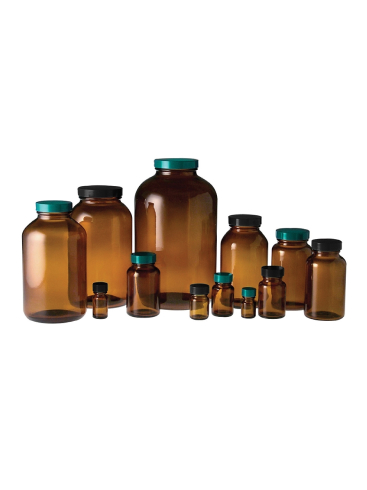
Wide mouth packer bottles
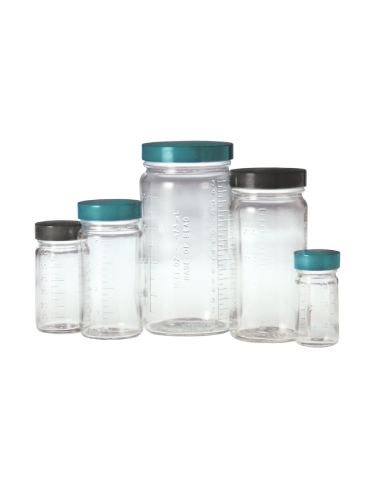
Graduated medium round bottles
Tubing glass forming processes
Glass tubing is made by heating and stretching molten glass into long, thin tubes. This process, often done by machines, involves maintaining precise temperature control to ensure uniformity and strength in the tubes.The Danner process manufactures glass tubing ranging from 1.6mm to 66.5mm in diameter, capable of drawing rates up to 400 meters per minute for smaller sizes. In this process, glass flows from a furnace's forehearth as a ribbon onto the upper end of an inclined refractory sleeve on a rotating hollow shaft or blowpipe. This ribbon wraps around the sleeve, forming a smooth glass layer that flows down and over the shaft's tip.The tubing is then drawn over support rollers by a drawing machine located up to 120 meters away. The final tubing dimensions are set as the glass cools and solidifies in the unsupported section between the blowpipe and the first roller.
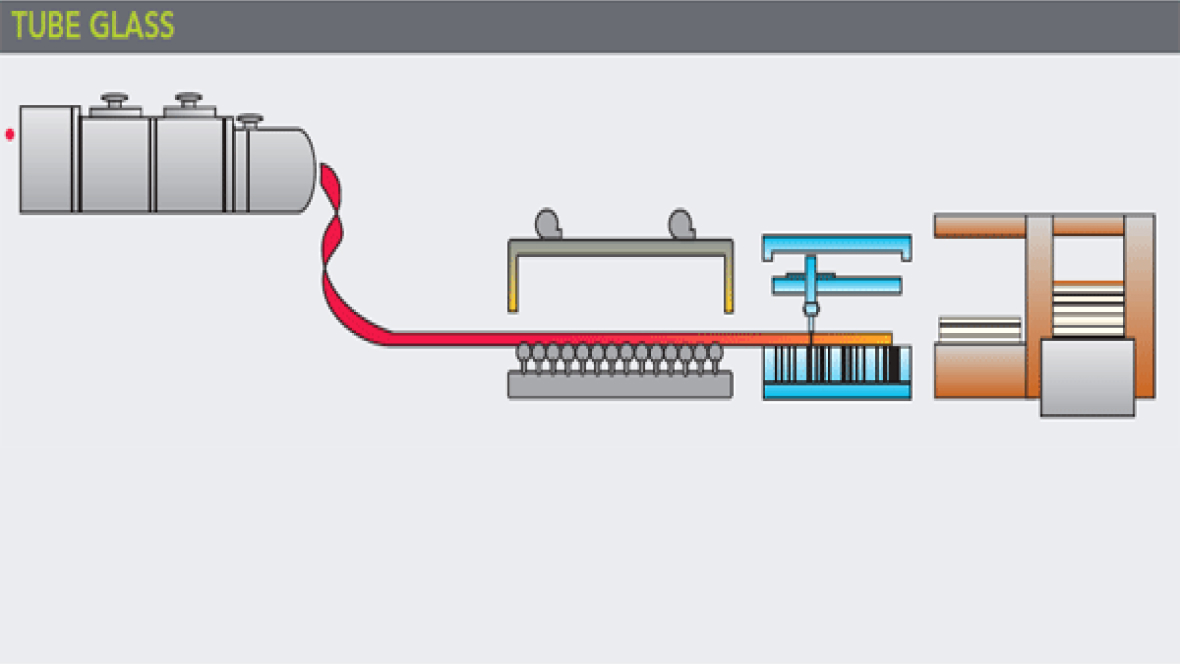
An illustration of the Danner glass forming process.
Glass flows from a furnace forehearth into a bowl containing either a hollow vertical mandrel or a bell surrounded by an orifice ring. The glass passes through the annular space between the bell and the ring, then moves over a line of rollers to a drawing machine located up to 120 meters away. This setup allows for controlled formation of glass tubing as it travels and cools before being cut to desired lengths.
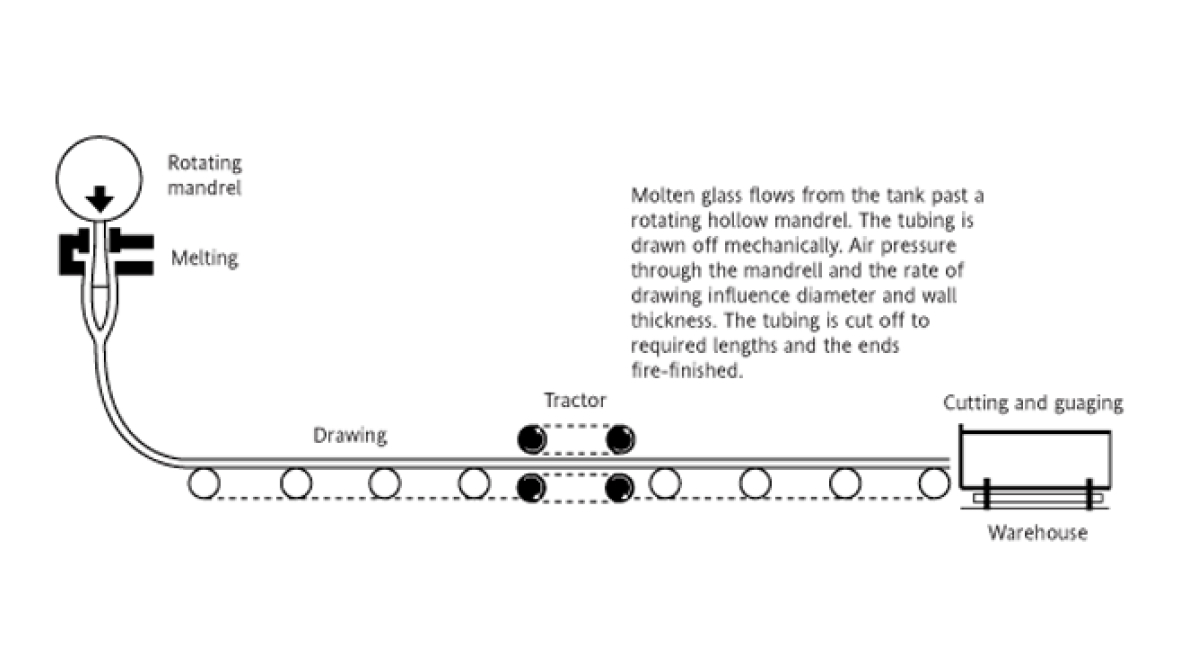
An illustration of the Vello glass forming process.
Quality inspection
Once the tubes are completed they, undergo multiple tests and inspections to ensure that they comply with quality standards. A visual inspection is conducted by an advanced, high-resolution camera system for defect removal. Once formed and cut to the correct shape, the dimensions are validated.

 Home > News